
September 30, 2026
Generative AI is changing how archives create, manage, preserve, and provide access to collections. It is also raising new questions about authenticity, copyright, licensing, provenance, and what it means to steward the historical record in an environment where authentic and synthetic records increasingly coexist.
Building on the work of the Trust in Archives Initiative, this one-day virtual symposium brings together a cross-section of perspectives to explore how generative AI is affecting archives and the broader communities that work with archival materials. Speakers will share current initiatives, practical experiences, and emerging approaches to authenticity, copyright and licensing, responsible access and use, and maintaining trust in archival collections.
The symposium is designed to encourage conversation across disciplines. Throughout the day, participants will hear how different organizations are approaching common challenges, explore where priorities and practices align, and consider where further collaboration is needed. The day will conclude with an open discussion, providing an opportunity to exchange ideas, identify shared needs, and help inform the next phase of community efforts.
SESSION ONE
8:00 am
Welcome and Introductions
- Rachel Antell, Archival Producers Alliance
- Laura Rooney, AMIA
8:10 am
Stewardship and GenAI: A Keynote Conversation
8:45 am
Cybersecurity, AI, and Us. A New DPC Technology Watch Guidance
Note Series on Cyber Security for Digital Preservation
9:05 am
Research. Findings from research efforts on how GenAI is already changing archival practices, what changes archivists are expecting, and how institutions are responding.
How Archivists Respond to the Threat of Fake History
AV Archivists’ Perceptions of AI: Findings from the AMIA Salary and Demographics Survey of the Field
SESSION TWO
9:45 am
Mapping the Response. As GenAI evolves, so does the response. Presenters will share how their initiatives are addressing emerging challenges, helping practitioners understand what’s at stake, and developing new standards, policies, and approaches for the work ahead.
Protecting Trust in the News Industry with Content Credentials and Publisher Identity
Updates on the SAA AI Task Force
FADGI’s New Resources on Content Authenticity and Provenance for AI-impacted AV Collections Content
Metadata Transparency – Moving from Proof of Concepts to Real World Adaption and Integration
InterPARES: Responsible Use of AI
An Overview of Content Provenance Technology via C2PA and CAWG
10:50 am
Reports from the Field. No single organization or discipline has the full picture of how genAI is impacting our field. The goal isn’t to present finished solutions, but to hear where organizations are at this moment and see where experiences overlap or diverge.
Defending Audiovisual Human Rights Documentation
Why Ask WAAI: Web Archiving and AI
- Jefferson Bailey, Internet Archive
Reframing the Colonial Gaze: AI, Archives, and Artistic Practice
Roping in AI: How TAMI Adapts Policy & Workflow for New Tech
AI and Archives: Navigating New Access Demands
GenAI and Digital Evidence in the Forensic Community
11:20 am
Open Forum
SESSION THREE
12:00 pm
Licensing. Perspectives from across the archival footage licensing landscape on how generative AI is reshaping licensing, including emerging attribution and consent frameworks and shifting client expectations.
“I Killed a Business Model”
Global ImageWorks | AI vs. AI: Licensing in the Age of Artificial Intelligence
AI and Licensing: Are the Rules of the Game Changing?
Periscope Films
Building the Next Generation of Sharing: CC Licenses and CC Signals
12:50 pm
Copyright & AI: An Overview
1:15 pm
The Future of Knowledges: Archives After AI
1:35 pm
Open Forum
2:00 pm
Closing Comments
SPEAKERS
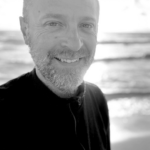 Ottar A.B. Anderson oversees the research and development, metadata strategy and quality control within SEDAK, the GLAM (Galleries, Libraries Archives and Museums) imaging service of Møre og Romsdal County in Norway, hosted by the Intermunicipal archive of Møre og Romsdal. He is one of the founding members of the Digital Object Authenticity Working Group (DOAWG) and expert member of the joint working group 26 in the ISO committee 42 – “Imaging system capability qualification for archival recording and approval”. Please check out www.doawg.org for more info about community collaboration on metadata and authenticity.

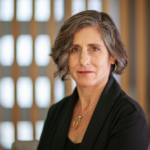 Rachel Antell has worked in documentary film production for 25 years, and over a decade of those as an archival producer. In 2014 she co-founded Sub-Basement Archival where she’s had the honor of working on dozens of documentaries that have screened worldwide, and garnered FOCAL Awards and an Emmy nomination for research and use of archival footage. In 2023, Rachel co-founded the Archival Producers Alliance (APA) to organize archival producers, educate the film community about the craft, and advocate for the field. There she helped lead the APA to publish the first industry guidelines and tool kit for the responsible use of generative AI in documentary; as well as co-founding the Trust in Archives Initiative which builds tools to safeguard audiovisual library and archive collections in the synthetic age.
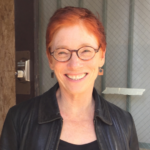 Patricia Aufderheide is University Professor, School of Communication, American University, the author of, among many others, Kartemquin Films: Documentaries on the Frontlines of Democracy and (with Peter Jaszi)Reclaiming Fair Use: How to Get Balance Back in Copyright, and honoree of many awards, including Emmy recognition for life achievement in improving the television industry in 2026, by induction into its Silver Circle.
Jefferson Bailey is Director of Archiving & Data Services at Internet Archive. Prior to Internet Archive, he worked on strategic initiatives, digital collections, and digital preservation at institutions such as Metropolitan New York Library Council, Library of Congress, Brooklyn Public Library, and has worked in the archives at NARA, NASA, and Atlantic Records. He has an MLIS in Archives from University of Pittsburgh.
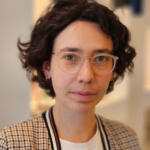 Lou Burkart is working as archival curator at the Eye Filmmuseum in Amsterdam, focusing on documentaries, female directors and queer film culture. They are also Secretary General of CCAAA, the Co-ordinating Council of Audiovisual Archival Associations. Previously they worked as restoration supervisor at the DFF – Deutsches Filminstitut in Frankfurt am Main. Their restorations premiered in festivals such as Il Cinema Ritrovato, Giornate del Cinema Muto, Festival Lumière and Cannes Classics. They presented their audiovisual projects and research at international conferences.
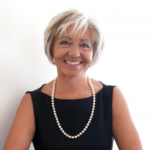 Dr. Luciana Duranti is Professor Emerita of archival science and diplomatics in the School of Information of the University of British Columbia (UBC), in Vancouver, Canada, and Affiliate Professor at the University of Washington at Seattle, United States. She is the Principal Investigator of the InterPARES research project, which, since 1998, has developed theory and methods for the creation, maintenance and preservation of trustworthy digital records across technologies. She has been the President of the Society of American Archivists and the Association of Canadian Archivists. Since 2015, she is the Chair of the Canadian Government Standards Board committee for Electronic Records as Documentary Evidence.” Feel free to cut it to your preferred length.
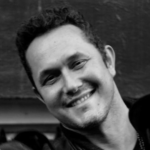 Williams Rossa Cole is a documentary film professional with 25 years experience as a producer, director, editor and archival producer with films premiering at Sundance, Rotterdam, on HBO, RTE, Amazon and other outlets and festivals. He earned a MSc (distinction) from the LSE as a Fulbright Scholar and graduated from Columbia University. He completed a Certificate in AI Strategy at eCornell, a CompTia Security + Certificate and is currently engaged in the Information Warfare Certificate at University of Arizona. In 2024 he published “Beyond Deepfakes: Synthetic Moving Imagery and the Future of History” in The Journal of Information Warfare.
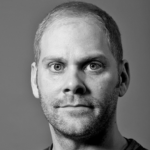 Charlie Eckert is an archival producer and researcher who uses investigative journalism skills to locate hard-to-find materials and elevate narrative storytelling. He works at Global ImageWorks, an independently owned archive built by researchers for researchers, and is part of the company’s internationally recognized research and clearance team. He is a member of the Trust in Archives Initiative Content Licensing Working Group and helped craft the initiative’s licensing templates. Charlie holds a Master of Science from Columbia Journalism School.
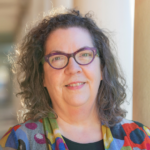 Brenda Gunn is the Associate University Librarian for Special Collections and Preservation at the University of Virginia Library. She has co-written a monograph on United States archival revolutions since 1980 to be published this fall by the Council on Library and Information Resources and is co-editing a special section of the American Archivist journal on artificial intelligence in archival enterprise. A certified archivist and a Distinguished Fellow of the Society of American Archivists (SAA), Brenda currently serves as SAA’s 81st President.
 Dave Hansen is the Executive Director of Authors Alliance. Prior to joining the Authors Alliance, Dave was an Associate University Librarian and Lead for Copyright & Information Policy at Duke University Libraries, where he was responsible for core research and collections support for faculty and students. Dave has testified before Congress, the U.S. Copyright Office, and the USPTO on copyright, AI, open access, and fair use issues affecting academic authors and universities, and has experience teaching and advising researchers, publishers, and librarians on copyright, fair use, and authors rights. He received his JD and MSLS from UNC Chapel Hill.
 Elizabeth Hansen is the Executive Director of the Texas Archive of the Moving Image (TAMI), a non-profit organization dedicated to discovering, preserving, and providing access to Texas’s moving image heritage. She oversees TAMI’s strategic operations, archival preservation workflows, community partnerships, and licensing initiatives.
 Shanna Hollich. As Senior Manager, Learning and Training, Shanna supports all of CC’s programs and projects by identifying and developing professional development and learning opportunities that are relevant to CC’s mission, including (but not limited to) the CC Certificates. Prior to joining CC, Shanna worked for 15 years as a librarian across multiple institutions – K-12 school, public, government, and academic. They have worked in public/access services, technical services and cataloging/metadata, and administration, ultimately serving as director for the John Stewart Memorial Library at Wilson College and the Guthrie Memorial Library in Hanover, PA. Their research during this time primarily involved copyright reform, cultural heritage, open access, open education, and social justice.
 Krista M. Hollis is the Associate Archivist at The Menil Collection and a member of the Trust in Archives Initiative Steering Committee. She is active in local and regional cultural heritage groups with research interests including sustainability, systems thinking, and reparative practices; these are the lenses through which Krista approaches the challenges presented by emerging technologies.
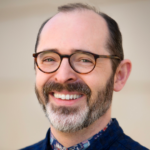 Jesse Johnston is a Clinical Assistant Professor at the University of Michigan School of Information. Johnston has been active in the cultural heritage field as an administrator, librarian, archivist, and civil servant. He teaches courses on digital preservation, information organization, and digital preservation and is currently researching the impacts of generative AI on archival reference practices.
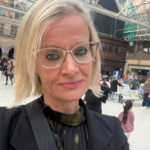 Heather Lowrie. A senior cybersecurity, technology and resilience leader, Heather Lowrie has worked in complex, highly regulated environments, supporting large-scale transformation and regulatory compliance initiatives and advising senior stakeholders on technology, security and resilience. Heather holds a first-class honours undergraduate degree in Law from the University of Dundee, a Postgraduate Diploma in Information Technology, and two master’s degrees from the University of Edinburgh, including one by research, all awarded with distinction. Her executive and non-executive experience includes serving as the first Chief Information Security Officer at The University of Manchester and leading security, risk and resilience for Scotland’s first digital-first Census. She has served as a member-elected Trustee of the UK Cyber Security Council and as Co-Chair of the ISC2 UK Advisory Council. She is a Fellow of both the British Computer Society and the Chartered Institute of Information Security, and a guest lecturer at The University of Manchester.
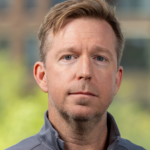 Bertram Lyons is a Director in Product Management at Magnet Forensics, overseeing evidence trust and data services. Prior to joining Magnet Forensics, Bert was the CEO at Medex Forensics (acquired by Magnet Forensics). Bert has over 20 years of experience leading consultants and development teams to manage large collections of digital assets and data, and to create innovative, flexible, and user-center software for clients where digital assets are a core function of their organization. His background specializations include the acquisition, management, analysis, and preservation of evidential, documentary, research, corporate, and archival data.
Before founding Medex Forensics, Bert served as Managing Director for Software at AVP, an information innovation company, and prior to that worked as a digital archivist for the American Folklife Center (AFC) at the Library of Congress. Bert has supported migration and software development projects for organizations nationwide, including the Federal Bureau of Investigation (FBI), the Smithsonian Institution, the Library of Congress, the JFK Presidential Library Foundation, HBO, Paramount Pictures, University of Kentucky, Indiana University, Yale University, Harvard University, Facebook, and the Mayo Clinic, among many others. Bert is an Associate Member of the American Academy of Forensic Sciences (AAFS) and an active member of the Scientific Working Group on Digital Evidence (SWGDE). He has received certification from the Academy of Certified Archivists and is a graduate of the Archives Leadership Institute. He holds an MA in museum studies with a focus in American studies and archival theory from the University of Kansas.
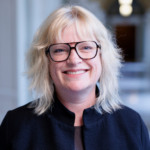 Kate Murray is the Digital Projects Coordinator in the Digital Collections Management and Services at the Library of Congress where she leads the Federal Agencies Digital Guidelines Initiative (FADGI) Audio-Visual Working Group and the Sustainability of Digital Formats website. Prior to joining the Library of Congress, Kate was the Digitization Process Development Specialist at the National Archives and Records Administration specializing in standardizing and documenting moving image and audio formats. Previous affiliations include the University of Maryland Libraries, Emory University Libraries, University of Cape Town Libraries and NYU Libraries. Kate is a member of AMIA (Preservation Committee co-chair 2010-2013), IASA (Technical Committee member), SMPTE, ISO/TC171/SC2 (PDF standards committees) and ISO/IEC JTC 1/SC 34/JWG 7 (EPUB standards committee). She was the co-chair of the Mellon Foundation/Digital Preservation Coalition’s Task Force on Technical Approaches to Email Archiving, co-coordinator of the 2015 Archiving Email Symposium, co-coordinator of the 2017 Architecture, Design and Engineering Asset Summit Symposium and co-coordinator of Born to Be 3D in 2018. In 2019, she received one of the inaugural JTS Awards for contributions to the technology of the audiovisual archiving field. Kate received her undergraduate degree in Medieval Literature from Columbia University and her MBIBL from the University of Cape Town.
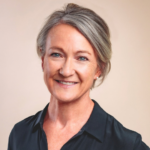 Dale Nelson is a partner in the West Adams boutique Donaldson Callif Perez. Prior to joining the firm, Dale served as Vice President and Senior Intellectual Property counsel at Warner Bros. for over 25 years. Dale specializes in issues related to copyrights, trademarks, personal rights and clearance, championing the free speech rights of clients in the filmmaking and creative industries. Dale is also a frequent speaker on IP topics and is currently Immediate Past Chair of AIPPI-US, the US chapter of AIPPI, an international IP organization with over 80 countries represented. Dale is also on the Endowment Board of the Western Center on Law and Poverty, and on the Board of the Independent Shakespeare Company, a non-profit entity hosting free Shakespeare productions in Los Angeles’ Griffith Park. Dale was recently recognized in Variety’s 2024 Legal Impact Report for her work with independent filmmakers.
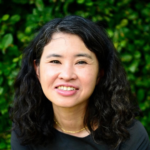 Yvonne Ng is an audiovisual archivist and a Senior Program Manager at WITNESS, where she trains and supports people to archive and preserve their human rights documentation. She currently serves on the Board of the CAW Collective and on the steering committee of the Trust in Archives Initiative (TAI). In 2024, Yvonne received the Alan Stark Award from the AMIA in recognition of her contributions to moving image archives and the association. Yvonne holds an M.A in Moving Image Archiving and Preservation from New York University.
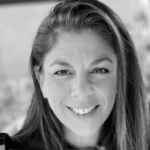 Kay Page is the Managing Director of FOCAL International, the not‑for‑profit trade association representing the global footage and content licensing industry, alongside technical specialists in post‑production, preservation, restoration and related technologies. With a career rooted in television – including roles at ITV and All3Media – and experience as an independent consultant, Kay has extensive expertise in archiving strategy, rights management and licensing. She is a passionate advocate for the creative and commercial value of archive content.
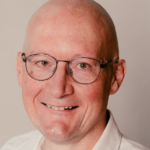 Brendan Quinn is a media technology expert and the Managing Director of the International Press Telecommunications Council (IPTC). With over two decades of experience in media innovation, he has led major projects including the development of the Associated Press’s APVideoHub.com syndication platform, the re-architecture of the BBC’s digital infrastructure, and the implementation of advanced content management systems at the BBC and at Fairfax Media in Australia. His work at IPTC reflects a deep commitment to advancing the global standards and technology frameworks that power the modern media industry, with a particular focus on trust and authenticity.
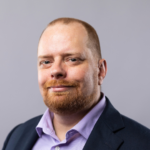 Brian Real is an assistant professor in the School of Information Science at the University of Kentucky. Real holds a PhD in information studies and a master of library science from the University of Maryland. Real is an active researcher on public libraries and film archives, and his recent efforts in the latter area have involved working with the Association of Moving Image Archives to document workplace conditions in the field. His work has been published in The Moving Image, Journal of Archival Organization, Library Quarterly, Public Library Quarterly, Historical Journal of Film, Radio, and Television, and other scholarly outlets.
 Megan Scott is Digital Archivist at Fondren Library, Rice University, where she leads digital preservation efforts for the Woodson Research Center Special Collections & Archives. Prior to joining Rice, she served as Digital Curation Librarian at Texas Tech University Libraries. She has published on the topics of institutional repositories and digital libraries, digital project management, and, more recently, AI and cultural heritage collections. She holds a B.B.A. in Marketing from Texas Tech University, and an M.L.S with a certificate in Digital Content Management from the University of North Texas.
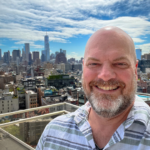 Eric Scouten is a principal scientist and identity architect for the Content Authenticity Initiative at Adobe. He leads the team developing open-source SDKs for content provenance and co-chairs the Creator Assertions Working Group, which defines technical standards for using digital credentials to provide attribution in digital content. In his spare time, he enjoys exploring the world (60+ countries so far) and blogging about his adventures.
 Nick Spark is the co-founder and curator of Periscope Film, a leading historic film archive based in Los Angeles and vice president of the non-profit Humanus Documentary Film Foundation. Nick has an MFA in film production from the USC School of Cinematic Arts. He is also an Emmy award winning documentary filmmaker whose projects have appeared on PBS, History Channel and National Geographic. He has also spent time in front of the camera and the microphone, appearing on PBS’ “NOVA” and “History Detectives”, the “Decoder Ring” podcast and National Public Radio’s “All Things Considered”. He recently worked with the University of Maryland, University of Southern California and Underwriters Laboratory to restore a previously lost 28mm industrial film from 1917, entitled “An Unbeliever Convinced.”
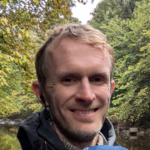 Garth Stewart is Head of Good Practice at the Digital Preservation Coalition (DPC). Garth works with the Good Practice team to understand what good practice in digital preservation looks like and where it is being carried out, towards facilitating ways and means to share that knowledge for the benefit of DPC’s Members and beyond. Garth came to DPC in 2025, having led the Digital Records Unit at National Records of Scotland.
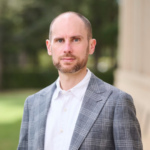 Dr. Keir Winesmith is the Chief Digital Officer at the National Film & Sound Archive (NFSA), mentor in the Creative Australia’s CEO Digital Mentoring Program, and co-founder of the bi-monthly Cultural Data Salon for Sydney cultural workers. His book, co-authored with Dr. Suse Anderson, is ‘The Digital Future of Museums’ (Routledge, 2020). Keir has a background in art, strategy and consulting, and has collaborated on award-winning projects that blend digital and culture across the globe. In 2018, he was named in Fast Company’s 100 Most Creative People in Business for this work. Keir holds hold a Ph.D. in new media and writes and speaks frequently on the intersection of digital and the arts, in particular, the role of digital as an agent for organisational change.
